



Tightly sealed homes keep energy bills down, but they can also trap stale air, excess moisture and pollutants inside your living space. A heat recovery ventilator in Columbus, IN, or an energy recovery ventilator in Columbus, IN, solves that problem by bringing in fresh outdoor air without losing the comfort you already paid to create. Advantage Heating and Air Conditioning Repair installs both systems for homeowners who want cleaner air without wasting energy.
These systems work by exchanging stale indoor air for fresh outdoor air, all while transferring energy between the two airstreams so your home does not lose the heating or cooling it already paid for. As stale air leaves your home, the unit captures the heat or coolness it carries and applies that energy to the incoming fresh air. The result is better indoor air without a spike in your utility bill.
This process runs continuously in the background, quietly cycling air through your home whether you are heating in the winter or cooling in the summer. Columbus homes see a real range of seasonal conditions, and a ventilator that recovers energy year-round helps your HVAC system avoid working overtime just to keep up.
The main difference between the two comes down to moisture. An HRV transfers heat between the outgoing and incoming air but leaves humidity levels alone. An ERV does the same heat exchange while also managing moisture, which makes it a better fit for homes dealing with Indiana’s humid summers or dry winter air.
Choosing between an energy recovery ventilator in Columbus, IN, and a heat recovery ventilator often comes down to your home’s specific humidity challenges. Homes that struggle with excess moisture in the summer or overly dry air in the winter usually do better with an ERV, since it helps balance humidity while it exchanges air. Homes without major humidity swings may do just fine with an HRV. Our technicians walk through your home’s conditions with you before recommending one over the other.
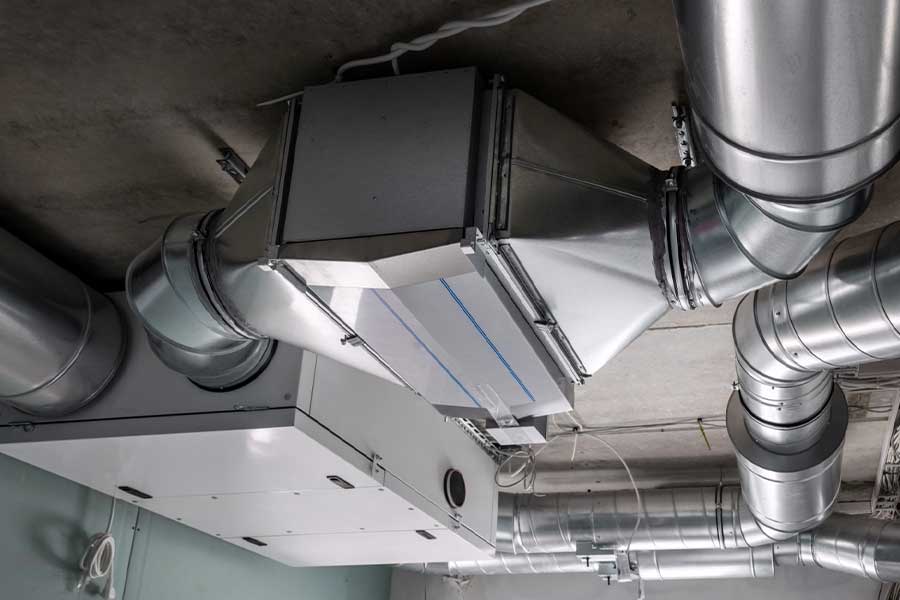
Fresh air matters more than most homeowners realize, especially in newer or recently updated homes built to be airtight. Without proper ventilation, indoor air can hold onto dust, odors, allergens and excess humidity that has nowhere to go. Adding a ventilator gives that air somewhere to escape while pulling in clean air from outside.
Beyond air quality, these systems help your HVAC equipment run more efficiently. Because incoming air is preconditioned using energy recovered from outgoing air, your furnace or AC does not have to work as hard to reach your target temperature. That means less strain on your equipment and a system that is likely to last longer.
For Columbus homeowners, humidity control is a real bonus during the summer months. A properly sized heat recovery ventilator in Columbus, IN, or ERV helps keep moisture levels in check, which can reduce the musty feeling that shows up in homes without adequate ventilation.
We start every project with an evaluation of your home’s layout, current ductwork and ventilation needs. This helps us determine whether an HRV or ERV is the better match, along with the right size unit for your square footage. We explain our reasoning clearly so you understand exactly why we are recommending a particular system.
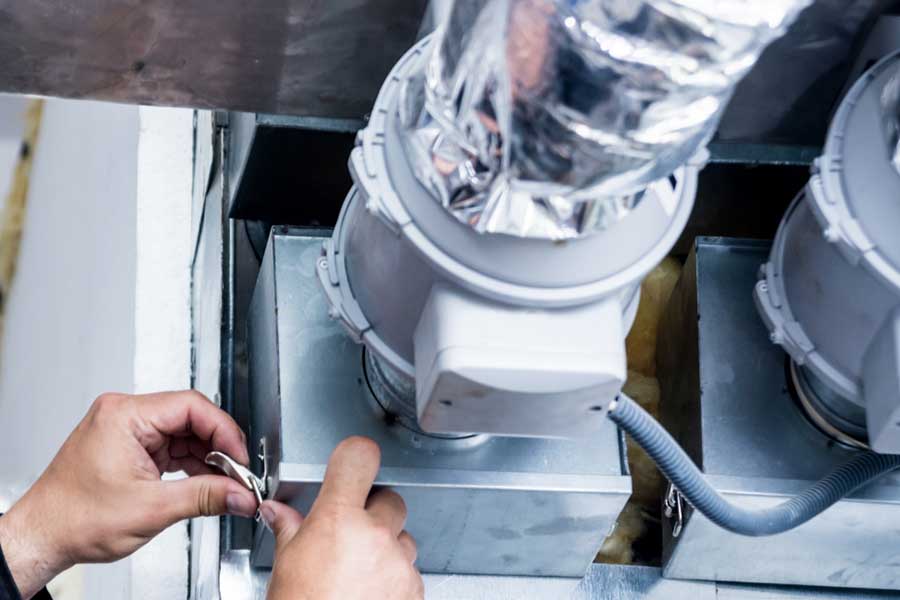
From there, our technicians handle the full installation, tying the new ventilator into your existing ductwork or installing dedicated ducting where needed. We test the system once installed to confirm proper airflow and balanced ventilation throughout your home. If you would like a second opinion before committing to a system, we are happy to provide one at no cost.
We also walk you through basic maintenance so your ventilator keeps performing the way it should. Filters need periodic cleaning or replacement, and we make sure you know the schedule that fits your specific unit before we leave.
Columbus homeowners trust Advantage for ventilation projects because we take the time to explain your options instead of pushing a one-size-fits-all solution. Here is what you can expect from our team.
Yes, we can typically tie into existing ductwork or install dedicated ducting as needed. We will evaluate your home’s layout during the initial visit to determine the best approach.